What Raw Batana Oil Should Look, Smell, and Feel Like
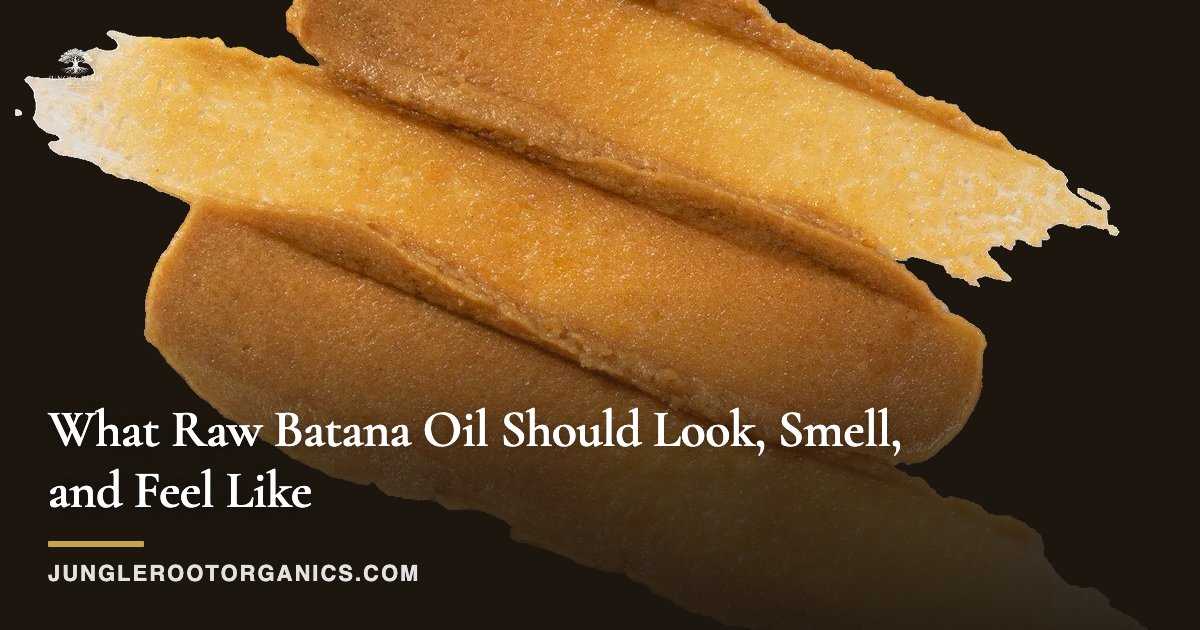
What does batana oil look like?
Genuine raw batana oil is dark brown to nearly black when it's solid, which is how it behaves at cooler room temperatures. Hold a chunk up to natural light and you'll usually see a deep olive undertone rather than flat black.
As it warms, it softens and eventually turns into a thick, pourable liquid that reads as dark amber to deep brown, similar in depth to strong molasses. Color intensity can shift slightly from batch to batch because this is a raw, unrefined oil, not a standardized industrial product.
If you're buying at wholesale volume, it's worth reviewing the visual specs on our products page before your first drum arrives, so you know roughly what to expect.
What should raw batana oil smell like?
Expect an earthy, nutty, faintly smoky aroma. That scent comes directly from the traditional hand-processing method used in La Mosquitia, Honduras, where the nut is worked without industrial refining or deodorizing.
It should not smell floral, perfumed, or sweet, and it should never carry a sharp chemical or solvent note. A raw oil with almost no smell at all is also worth questioning, since deodorizing or heavy refining strips out the natural aroma along with other qualities buyers are paying for.
Rancid, sour, or musty smells are a separate issue and usually point to age or storage problems rather than the oil itself, which is a good reason to ask about handling and turnaround before you order.
What should the texture feel like?
At room temperature, raw batana oil is dense and waxy, closer to a firm butter than a runny oil. Press a small amount between your fingers and it should soften and melt from body heat within a few seconds.
Once melted, it turns into a smooth, silky liquid that absorbs into skin without leaving a heavy greasy film, though a light natural sheen is normal. It should never feel gritty, chalky, or watery straight out of the drum.
If a sample feels thin and slips off the skin like a light mineral oil, that's inconsistent with a raw, unrefined batana oil and worth flagging with whoever supplied it.
How should it behave when you melt or warm it?
Warm a small amount gently, using a double boiler or a container set in warm water rather than direct heat or a microwave. It should melt evenly into a smooth, clear-running oil with no cloudiness and no layers separating out.
- A trace of fine natural particulate settling at the bottom after melting can be normal for a raw, hand-processed oil.
- Visible chunks, debris, or a gritty sediment that doesn't dissolve is not normal and should be questioned.
- Oil that separates into distinct layers when melted suggests blending with another substance.
Buyers evaluating a new source for the first time can find guidance on what to check before scaling up on our page for wholesale buyers.
What batch-to-batch variation is normal?
Because this oil is hand-processed in small batches rather than run through standardized industrial refining, some variation in color depth, scent strength, and firmness between shipments is expected and normal. Seasonal differences in the harvest can shift these sensory details slightly without indicating a quality problem.
What shouldn't vary is the fundamental profile: dark color, earthy nutty smell, and waxy-to-smooth texture. A Certificate of Analysis and technical data sheet are available to buyers who want documentation alongside the sensory check for each batch.
You can read more about the sourcing and hand-processing tradition behind this variation on our story page.
Checklist: how to evaluate a sample or drum when it arrives
Run through these steps every time a new batch comes in, whether it's a paid evaluation sample or a full drum:
- Let the oil sit at the room temperature of your facility before judging color or hardness, since a container that's been in transit will read differently until it settles.
- Check color under natural light rather than fluorescent light, which can wash out the brown tones.
- Open the container away from other strong smells and check the scent immediately, then again after a few minutes of air exposure.
- Warm a small amount in your palm to test how it melts and feels on skin.
- Melt a spoonful separately to check for clarity, sediment, and any separation.
- Compare notes against your previous batch or the Certificate of Analysis if this is a reorder.
If anything on this list looks off, reach out through our contact page before committing to a full drum order.
What are the warning signs of a diluted or mislabeled oil?
Watch for a pale yellow or light tan color instead of dark brown to black, a texture that's thin and watery at room temperature instead of waxy, and a scent that's faint, sweet, or chemical rather than earthy and nutty.
These signs usually point to dilution with a cheaper carrier oil, over-refining, or an added fragrance masking a weak natural scent. Any of them is reason enough to ask the supplier direct questions and request paperwork before you scale up an order.
This sensory check works best paired with a documented supply chain and available lab paperwork, which is exactly why every batch we ship comes with a Certificate of Analysis on request. Start with a look at what raw batana oil is supposed to be and build your evaluation process from there.
Frequently asked questions
Does raw batana oil smell bad?
No, a genuine batch smells earthy, nutty, and slightly smoky, not unpleasant. A sharp chemical odor, or a sour and musty smell, is what actually signals a problem, not the natural roasted-nut aroma from hand-processing.
Is it normal for batana oil to be solid one time and liquid the next?
Yes, this oil is temperature sensitive and will be a dense solid in cooler conditions and a thick liquid when warm. Judge color and texture only after it has reached a stable room temperature, since a partially cooled or partially melted sample can look misleading.
Can I confirm purity just by looking at the oil?
A sensory check is a useful first screen but not a substitute for documentation. Pair what you see, smell, and feel with the Certificate of Analysis and technical data sheet a supplier provides so you're not relying on appearance alone.
Why does my new drum look slightly different from my last order?
Small shifts in color depth or scent strength between batches are expected with a raw, hand-processed oil rather than an industrially standardized one. Seasonal harvest differences can account for this without indicating a quality issue, as long as the core dark color, nutty smell, and waxy texture are still present.
What should I do if a sample doesn't match this description?
Don't place a full drum order yet. Contact the supplier, ask for the Certificate of Analysis and technical data sheet, and get a clear explanation of the discrepancy before you commit.
Buying batana at volume?
Request wholesale pricing, our COA, and the technical data sheet.
Request wholesale pricing