Labeling Batana Oil Products in the US: INCI Naming and Claims to Avoid
What Is the INCI Name for Batana Oil?
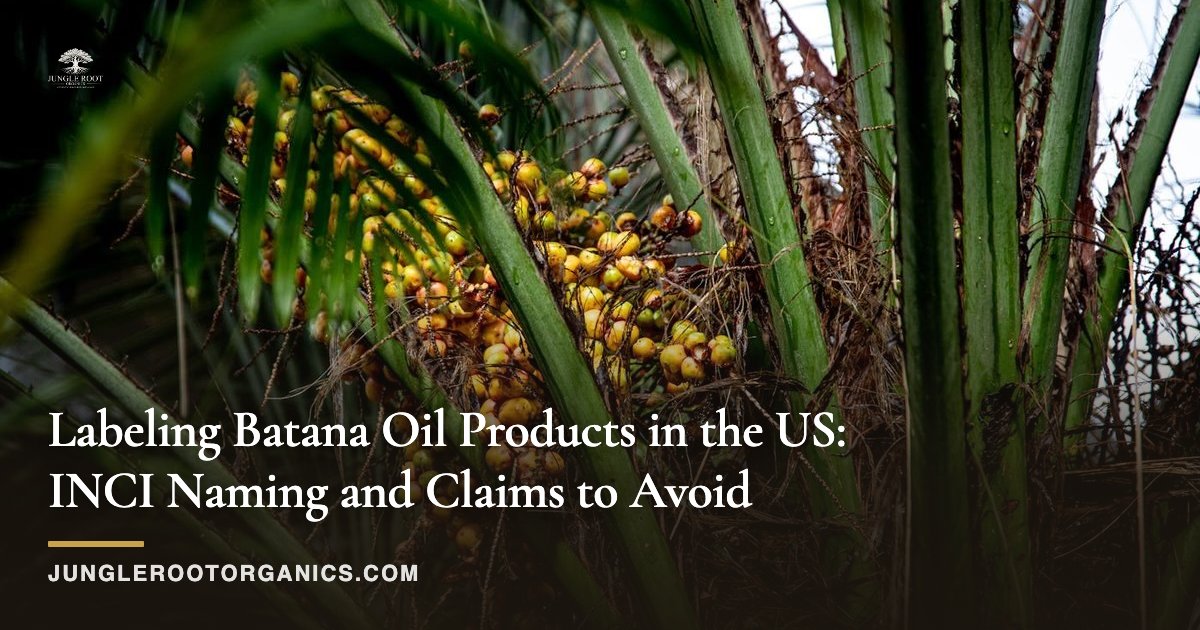
Batana oil is traditionally hand-processed from the fruit of Elaeis oleifera, the American oil palm native to Central America, including the La Mosquitia region of Honduras. Under the International Nomenclature of Cosmetic Ingredients (INCI) system, the ingredient list name is Elaeis Oleifera Fruit Oil.
That's the name a formulator or regulatory reviewer will expect to see. 'Batana oil' is a common or trade name, not the INCI designation, so it shouldn't stand alone in the ingredient declaration. If you're sourcing the raw oil for a formulation, our guides library covers more on how this ingredient behaves in different product types, and our products page lists the raw batana oil we supply wholesale.
Where Does the INCI Name Go on Your Label?
The INCI name belongs in the ingredient list, written in the same format as every other ingredient on the panel: Elaeis Oleifera Fruit Oil. If you want consumers to recognize the ingredient by its common name, you can add it in parentheses immediately after the INCI term, for example 'Elaeis Oleifera Fruit Oil (Batana Oil).'
If batana oil is one ingredient in a blend, ingredients are typically listed in descending order of concentration above 1%, then in any order below that. If it's the sole ingredient, as in a straight raw oil product, the ingredient list is simply the one INCI name. Don't substitute the trade name for the INCI name on the actual declaration, even if 'batana oil' is prominent on the front label or in your marketing copy.
Is Batana Oil Cold-Pressed? What Should You Call the Extraction Method?
No. Raw batana oil is traditionally hand-processed, not cold-pressed, and the two terms describe genuinely different methods. Cold-pressing is a mechanical extraction process; the traditional processing used for batana oil is a different method entirely, and using 'cold-pressed' on a label or product description when that's not how the oil was made is a mislabeling risk, not just a style choice.
Accurate process language matters as much as the INCI name. Terms like 'raw,' 'unrefined,' and '100% pure' describe the state of the oil and should match what's actually documented for your batch. Before you finalize any process claim, check it against the documentation available to wholesale buyers, including the Certificate of Analysis and technical data sheet for the specific lot you're purchasing.
What Claims Should You Avoid on a Batana Oil Label?
Keep the positioning cosmetic. Batana oil can be described in terms of how it feels and performs on skin and hair, softening, conditioning, adding shine, moisturizing, and similar language. What it should never claim is a medical or physiological effect.
- Avoid words like 'treats,' 'cures,' 'regrows,' or 'stimulates hair growth.' These push a cosmetic into drug-claim territory under FDA rules, and that's a different regulatory category entirely.
- Don't state or imply lab-tested percentages, active compound levels, or clinical results unless you have documentation backing every figure. Never invent a number to fill a gap on the label.
- Don't call the oil cold-pressed if it wasn't processed that way.
- Avoid absolute claims like 'guaranteed' or 'proven' without evidence you can produce on request.
None of this is legal advice, and cosmetic labeling rules vary by state and by claim type, so it's worth having a regulatory or legal reviewer look at final label copy before it goes to print.
How Do You Build a Compliant Batana Oil Label? A Practical Checklist
- Confirm the INCI name against your supplier's documentation. Cross-check 'Elaeis Oleifera Fruit Oil' with the Certificate of Analysis and technical data sheet before it goes on your artwork.
- List ingredients in the correct order. Descending by concentration if it's a blend; a single INCI name if the product is raw batana oil alone.
- Pair the INCI name with the trade name correctly. INCI name first, common name in parentheses if you use one.
- Strip out medical and hair-regrowth language. Replace with cosmetic descriptors: conditioning, moisturizing, softening, shine-enhancing.
- Match extraction language to the actual process. Raw, unrefined, hand-processed, not cold-pressed.
- Request an evaluation sample before you commit to a full order. Testing the oil yourself, and seeing how it reads on your own label mockups and product photography, catches issues before a drum-size order ships.
If you're working through this checklist for a new product line, our team can walk through documentation and lead times with you directly via our contact page.
Do You Need a Certificate of Analysis to Label Batana Oil Correctly?
A Certificate of Analysis (CoA) and technical data sheet (TDS) are what let you back up the claims on your label with actual documentation rather than guesswork. They confirm the INCI identity, purity, and processing details for the specific batch you're buying, which is the information you need before you finalize ingredient declarations or marketing language.
We provide a CoA and TDS to buyers on request. Because minimum orders run one drum (33 to 75 gallons, with flexibility for brands launching their first product), it's worth requesting a paid evaluation sample first, a 1-gallon pail or a 4 oz jar for smaller tests, to confirm the oil and its documentation match what your label needs before committing to a full drum. Lead time typically runs 1 to 2 weeks depending on season. Read more about how we source and process the oil on our story page.
Frequently asked questions
What's the difference between the INCI name and the trade name for batana oil?
The INCI name, Elaeis Oleifera Fruit Oil, identifies the botanical source and is what regulatory bodies and formulators expect on an ingredient list. 'Batana oil' is the trade or common name, useful for marketing and consumer recognition, and it can appear in parentheses next to the INCI name but shouldn't replace it in the ingredient declaration.
Can I call my product 'cold-pressed batana oil' if I'm not sure how it was processed?
No. Only use 'cold-pressed' if that's documented as the actual extraction method for the specific oil you're using. Raw, traditionally hand-processed batana oil is not cold-pressed, and labeling it as such creates a mislabeling risk regardless of intent.
Is 'raw' or 'virgin' an acceptable label term for batana oil?
Terms like 'raw' and 'unrefined' can be used when they accurately describe the oil's processing state, but they should match what's documented for your batch rather than being applied as generic marketing language. Check the term against your supplier's technical data sheet before printing.
Do I need to disclose an allergen warning for batana oil products?
Allergen and warning statement requirements depend on your full formulation, your state, and how the product is marketed, so this isn't something a general guide can answer definitively. Consult a regulatory or legal professional familiar with cosmetic labeling for your specific product before finalizing label copy.
Where can I get documentation to support the claims on my batana oil label?
Request a Certificate of Analysis and technical data sheet from your supplier for the specific batch you're purchasing. These documents confirm ingredient identity and processing details, which is what your label claims should be built on rather than assumptions.
Buying batana at volume?
Request wholesale pricing, our COA, and the technical data sheet.
Request wholesale pricing